
Aligned with nature, industry and society
In 2025, we are in our second year of sustainability reporting in accordance with the internationally recognised Global Reporting Initiative (GRI) framework. Building on a solid data foundation from the previous year, we are now working with even greater focus. We know where we need to improve, and we are measuring progress systematically.

“Sustainability is no longer an add-on to our operations. It is a necessary precondition for growth, success, and continued delivery of world-class seafood. This is our second year of systematic reporting, and we now have an even stronger foundation for prioritising correctly and improving where it matters most.”
T470 – A mark that guarantees a quality product and our high standards.
— Alexander Johnsen
CEO at Astafjord Slakteri
Our value chain – How the salmon is prepared for the world’s tables
🐟
Our value chain – How the salmon is prepared for the world’s tables
✈️
Our value chain – How the salmon is prepared for the world’s tables 🐟 Our value chain – How the salmon is prepared for the world’s tables ✈️
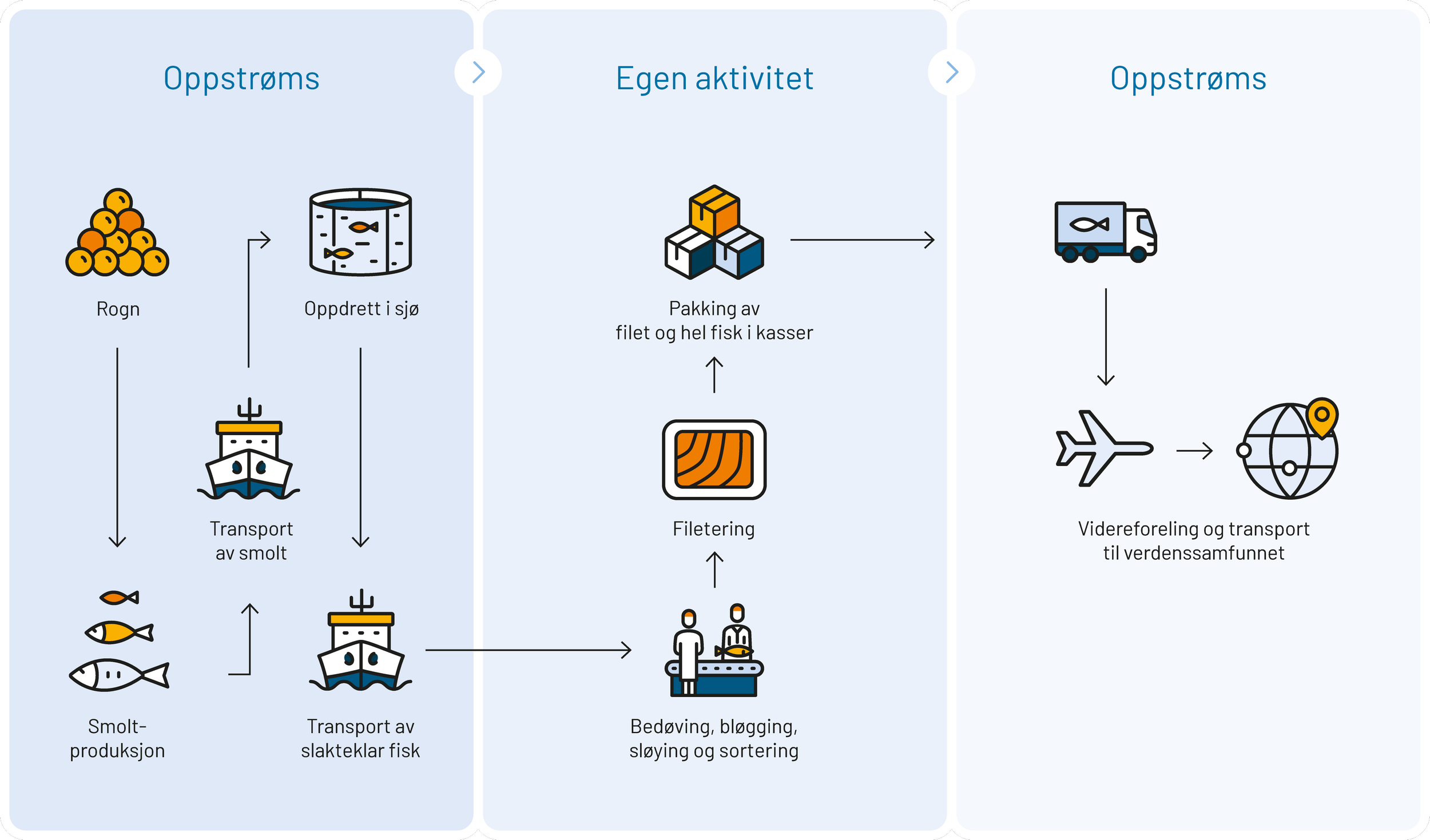
Click here to read more about what happens to the salmon after it arrives at our facility.
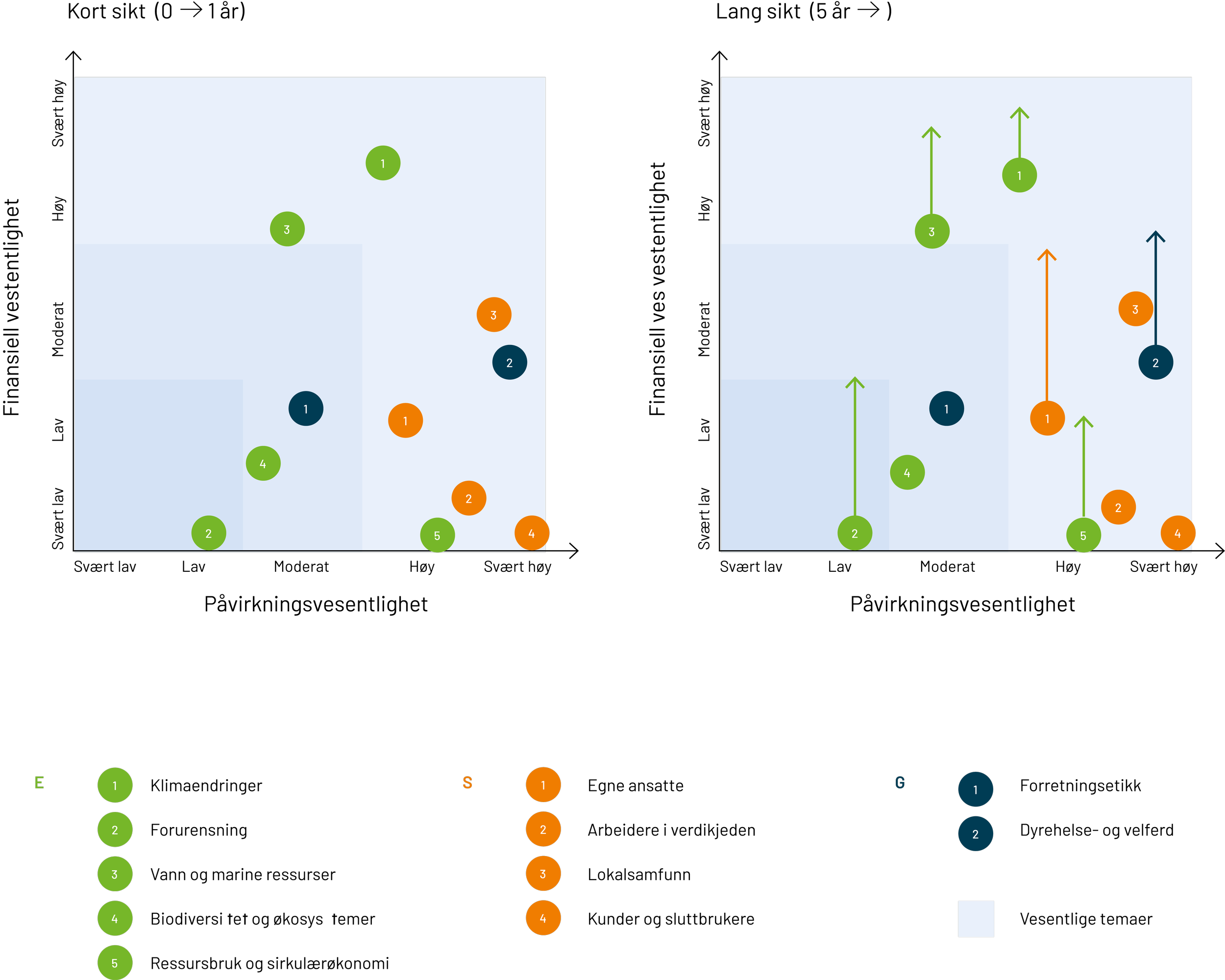
Materiality assessment
Materiality assessment is an important tool for ensuring focused and relevant sustainability work. It helps us understand where we have the greatest impact — both positive and negative — and where we should direct our resources to create the greatest possible value for the environment, people, and local communities.
The results of the materiality assessment form the basis for our priorities and reporting going forward, providing a solid foundation for measuring progress over time. In this way, we ensure that our sustainability work is targeted, relevant, and aligned with both our internal objectives and the expectations of our stakeholders.
The assessment has been conducted with reference to the requirements of the EU Corporate Sustainability Reporting Directive (CSRD) and follows the principles of double materiality.
Our people
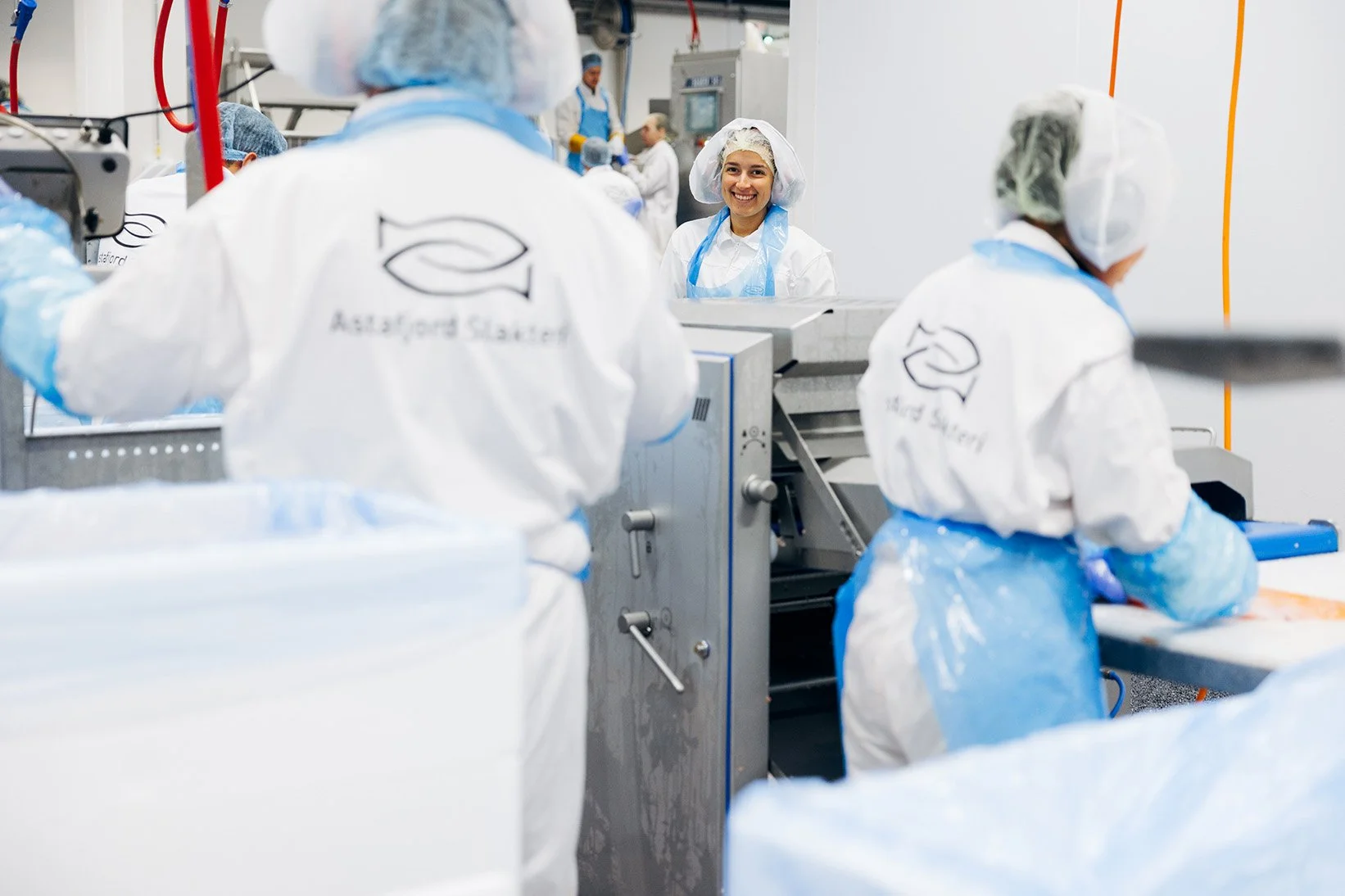
Our people is the core of the production, and we work purposefully to create a safe, fair, and inclusive working environment - regardless of nationality, background, or role. Astafjord Slakteri is one of the largest employers in Gratangen municipality, with around 100 employees throughout the year.

92 employees of 11 different nationalities
over
EUR 5 million
paid in wages to employees in 2025

Health, Safety and Environment (HSE)
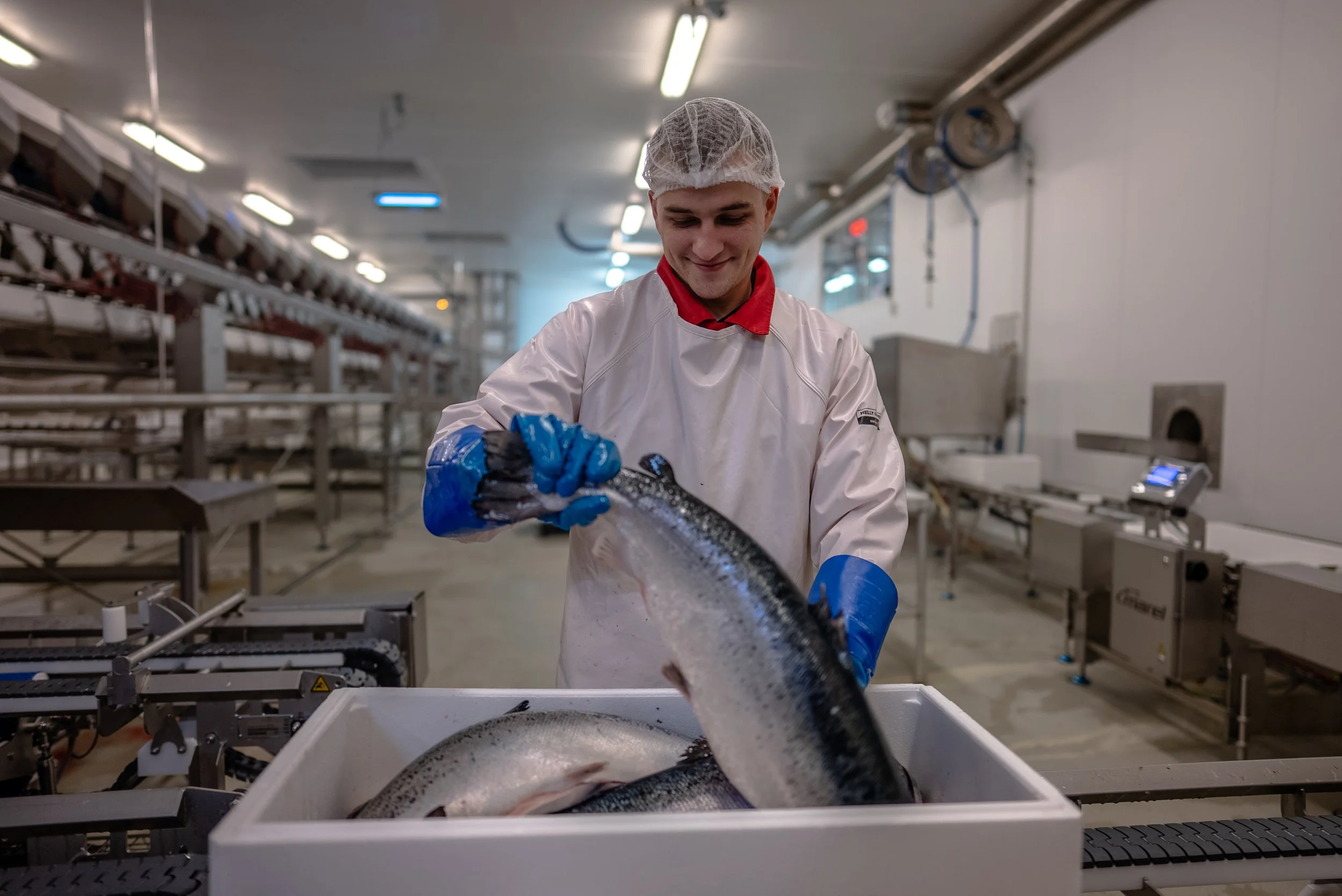
Behind every production line and machine stands a person. The working day in the facility is characterised by fast pace, equipment handling, and strict hygiene requirements. It is our responsibility to ensure that all employees have a safe and secure working environment.
Through clear procedures, thorough training, and close follow-up, we aim to prevent accidents and build a strong safety culture.
Sickness absence has shown a positive trend over three years: from 11,3% in 2023, to 7,8% in 2024, and down to 4,5% in 2025. We believe the continued decline is linked to closer management follow-up, regular monthly meetings with all employees, and strengthened leadership training. All employees are offered an annual health check through the occupational health service.
4,5%
sickness absence in 2025.
Our target is below 4%.
1
work-related injury in 2025.

Climate and environment
As a salmon processing facility, we are closely connected to nature — both within the value chain of which we are a part and in our everyday operations. It is therefore important to us to minimize our environmental impact. We achieve this through the efficient use of resources, whether that involves energy, water, or raw materials.
Greenhouse gas emissions
In 2025.
All figures are reported in kg CO₂e.
| Market-based method | Location-based method | |
|---|---|---|
| Scope 1 – Direct emissions, fossil fuels | ||
| 2 599 | 2 599 | |
| Scope 2 – Indirect emissions, electricity | ||
| 2 262 619 | 56 660 | |
| Scope 3 – Indirect emissions related to purchased goods and services | ||
| Production of fish transport boxes | To be updated | To be updated |
| Salmon production | To be updated | To be updated |
| Total greenhouse gas emissions CO₂e | To be updated | To be updated |
Emission intensity
Please note that this table shows the figures for 2024.
To be updated when the Scope 3 inventory for 2025 is completed.
| Market-based method | Location-based method | |
|---|---|---|
| Slaughter volume in tonnes | 22 008 | 22 008 |
| Tonnes of CO₂e emissions | 3 857 | 1 294 |
| Tonnes of CO₂e per tonne of slaughtered fish | 0,175 | 0,059 |

Fresh water management
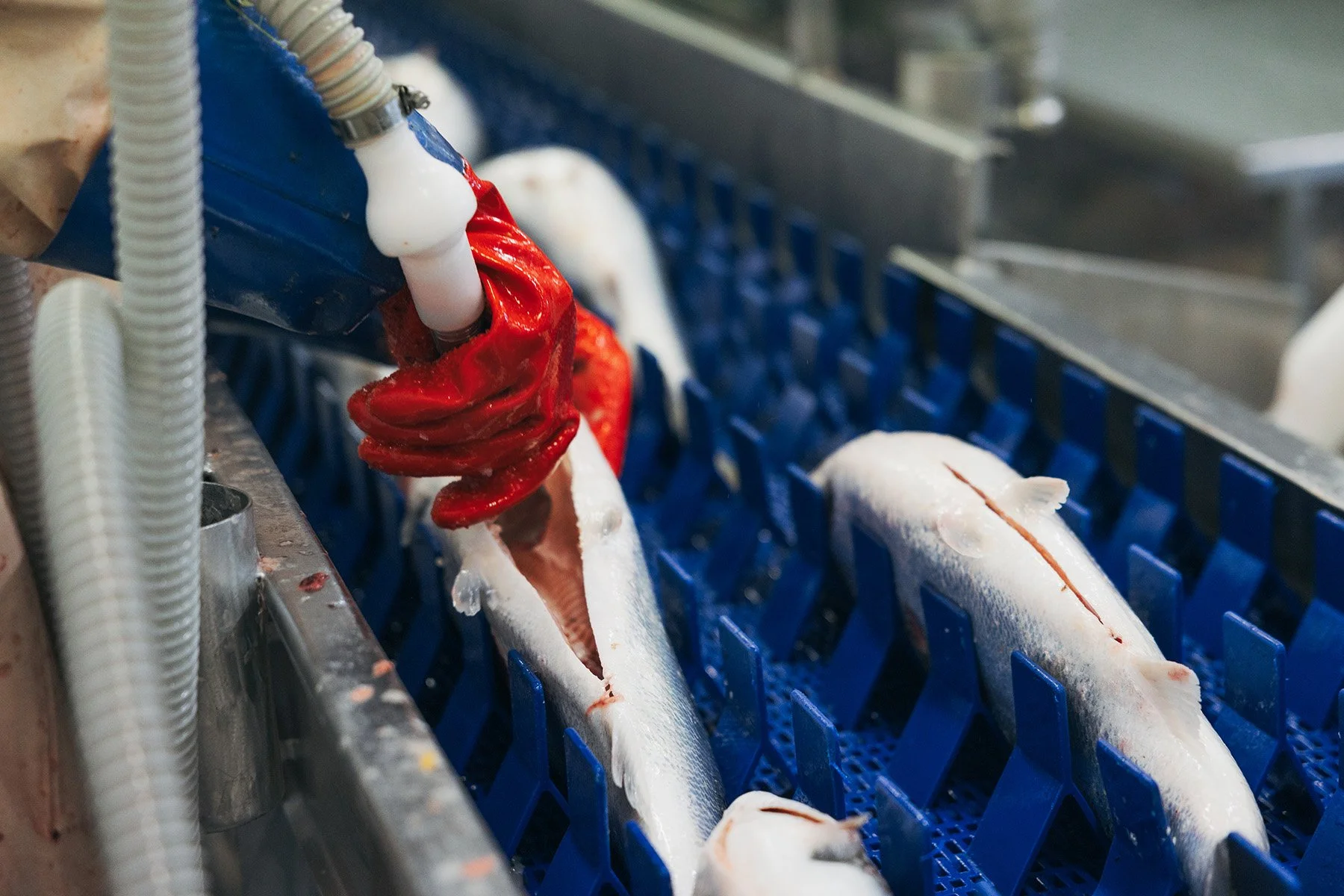
Fresh water is used for several important purposes in our production: cleaning of production premises, cooling of machinery, ice production, as well as drinking water and sanitary facilities. Thorough washing and rinsing vital machine components and conveyor belts are essential to maintaining good hygiene and product quality.
Wastewater is collected and treated in our own treatment plant before being discharged.
99.8%
purification rate for wastewater, documented monthly through sampling.
By-products and raw material utilisation
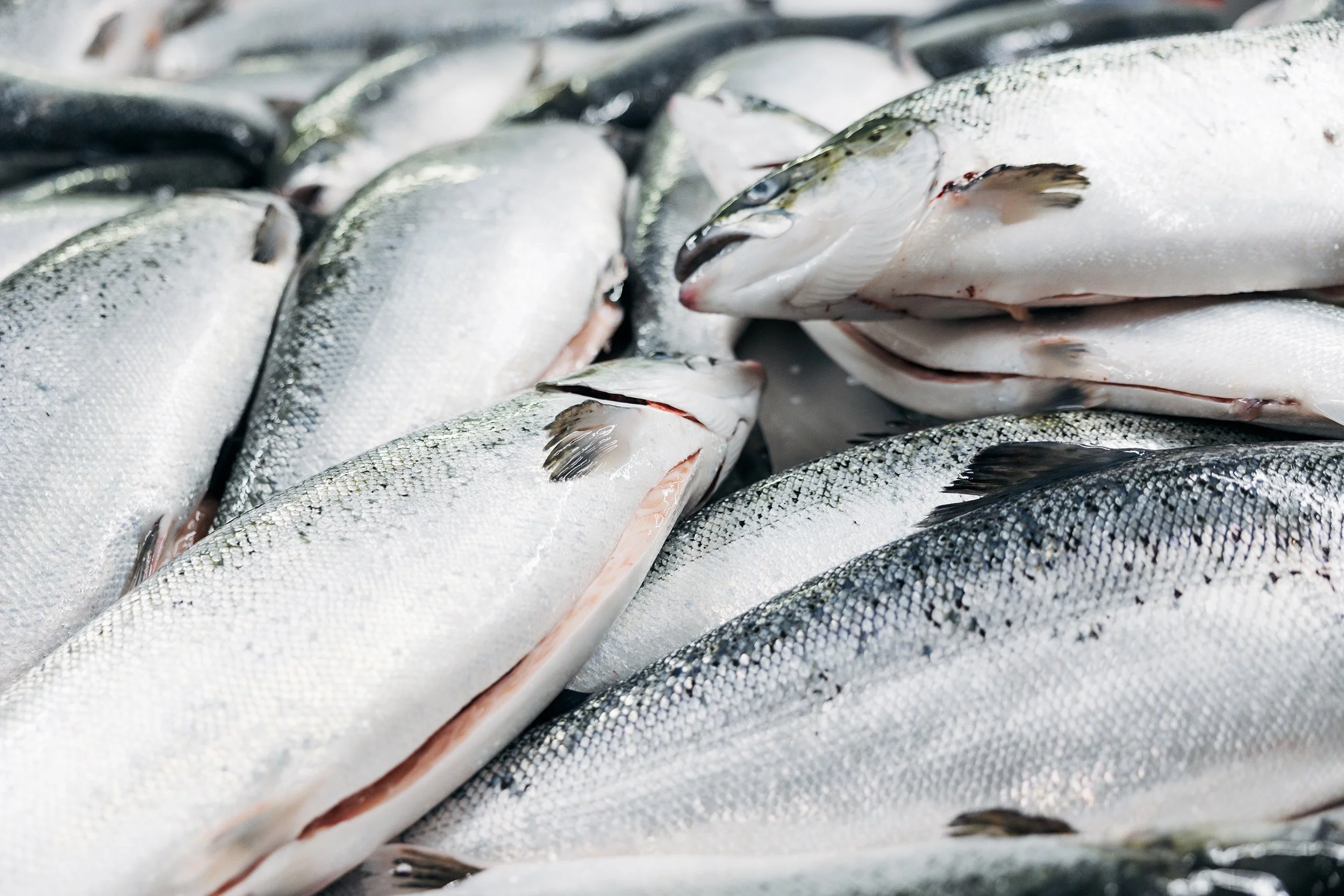
When we process salmon, there are parts of the fish that do not become fillets. Rather than being discarded, these are passed further along the value chain. They are collected in large tanks and preserved as silage, which can be used for purposes including animal feed and other by-products. We pack heads, backs, and belly flaps from fillet production for human consumption. In this way, we utilise virtually the entire fish.
633 800 litres
category 2 (K2) silage
3 651 400 litres
category 3 (K3) silage
Financial performance and governance
2025 was a strong year for Astafjord Slakteri. Operations returned to a surplus, and we slaughtered more fish than ever before — a total of 25,413 tonnes, up from 22,088 tonnes the previous year.
A key reason for the strong results is improved staffing control and greater success in retaining experienced employees over time. A stable workforce leads to better production flow and fewer costly start-up phases.
At the same time, we recognize clear potential for improvement, particularly regarding production uptime and access to spare parts. Replacing ageing equipment requires investment but is necessary to ensure stable and efficient operations. Planned maintenance will be a priority going forward.
25 413 tonnes
of salmon slaughtered in 2025
over
EUR 10.3 million
in revenue in 2024
(The 2025 figures will be updated later)
approx.
EUR -0.013 million
in net profit in 2024
(The 2025 figures will be updated later)
Sustainability overview 2025
We have compiled an overview of the most important sustainability topics for 2025 ahead of the completion of the full GRI report.
Sustainability reporting (GRI)
Our full GRI sustainability reporting is currently available in Norwegian.
We are working on an English version while finalising our 2025 reporting.